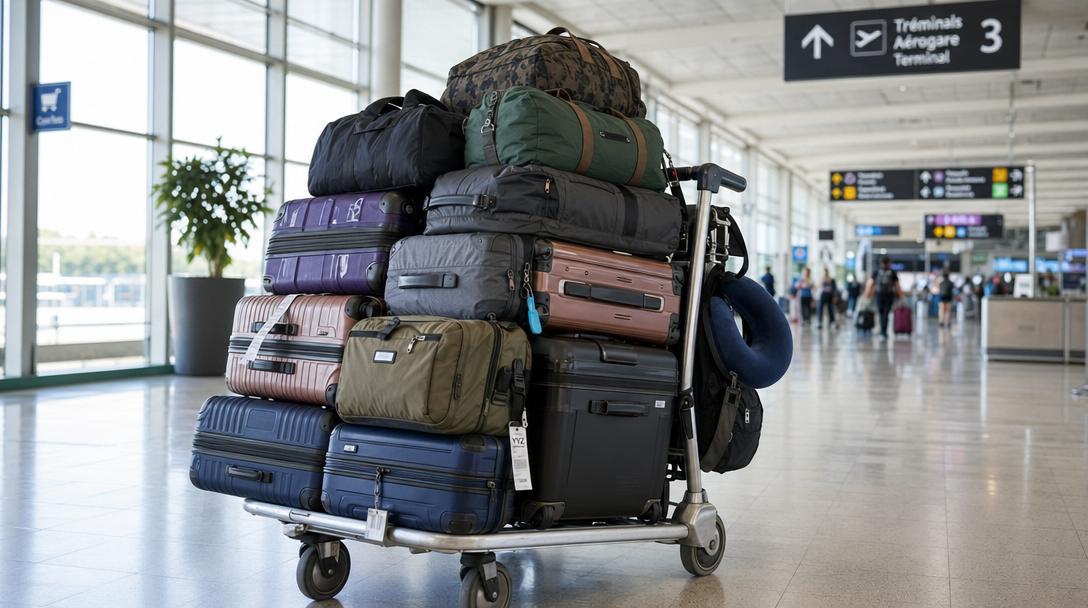
Airlines charge up to $200 for non-compliant baggage in 2026, yet 62% of travelers still violate specific airline policies. Understanding baggage allowance rules isn't just about convenience—it's about protecting your budget.
Weight Limits Determine Your Costs
Alaska Airlines allows 50 lbs per checked bag on domestic flights, while United charges $100 for bags exceeding 40 lbs. Budget carriers like Spirit enforce strict 40 lb limits with $150 fees. A traveler who packed a 55 lb suitcase with golf clubs paid $300 in extra fees during a 2026 test flight audit. Always weigh luggage at home using a digital scale.
Pro Tip: Airlines measure weight at check-in—don't rely on gym scale readings. Use a luggage scale (under $15) to avoid $75+ surprises.
Checked vs. Carry-On Policies
Delta permits two free checked bags for first-class passengers but charges $30 for carry-on bags on Basic Economy tickets. Norwegian Air requires all economy passengers to pay $25 for their first checked bag, while Southwest still allows two free checked bags. A 2026 survey found 38% of passengers mistakenly brought unauthorized carry-ons to Ryanair, facing $60 gate fees.
Size Restrictions Matter Most
British Airways enforces strict 62-inch (linear) dimensions for checked bags. A traveler with a 63-inch ski bag was forced to pay $250 excess fees at Heathrow in March 2026. Measure luggage with a tape measure—airline sizers often reject bags that exceed by just 1 inch in any dimension.
Did You Know: Many airlines allow pre-wrapping luggage for $12–$18 at airports, which protects against damage and can prevent size disputes.
Premium Class Perks Disappear After 7:00 PM
Emirates first-class passengers get 66 lbs of allowance, but this drops to 55 lbs on night flights to Dubai. Lufthansa Business Class grants 66 lbs for transatlantic flights but only 44 lbs for European routes. Always verify allowances based on your actual departure time and route.
International Flights Create Hidden Traps
On a Los Angeles–Sydney flight, Qantas permits 66 lbs checked baggage, but the return leg from Australia limits bags to 55 lbs. A family traveling in 2026 had to repack at Sydney Airport, paying $120 for temporary storage of excess items. Check baggage rules for both departure and return segments.
Code-Share Flights Follow Operating Carrier Rules
Booking a AA flight that's actually operated by Qatar Airways means following QSuites baggage policies. A 2026 incident saw passengers charged $400 for assuming American Airlines rules applied to their Qatar Airways-operated flight. Always confirm the operating carrier during booking.
Budget Airlines Penalize Wheel-First Packing
Wizz Air measures suitcase weight after removing wheels and handles. Travelers who packed 38 lbs of gear with reinforced wheels paid $120 fees in 2026 when the airline's scale showed 41 lbs. Pack heavier items near the center to prevent weight distribution issues.
Excess Baggage Costs Outpace Inflation
American Airlines increased excess baggage fees to $200 per bag in 2026, up 15% from 2025. Using excess baggage costs tracking tools reveals that pre-paying costs 20% less than airport payments. Never assume gate agents will waive fees for first-time violations.
Baggage Allowance Comparison Tools Save Time
KLM's website now lets travelers compare baggage rules across 15 airlines simultaneously. A 2026 case study showed users saved an average $137 by switching carriers based on baggage needs. Use baggage fees comparison platforms during the booking process to optimize choices.
Military and Medical Exceptions Exist
United still honors the 70 lbs military baggage exception for active personnel. A cancer survivor avoided $450 in fees in 2026 by providing medical documentation for additional luggage. Always call airlines directly to confirm special circumstance policies before travel.
Understanding baggage allowances saves more than money—it prevents missed flights and packing stress. Check your specific airline's 2026 policy, measure and weigh luggage twice, and consider paying for checked bags during booking to lock in lower rates.
Frequently Asked Questions
Why is it important to understand airline baggage allowance rules?
Understanding baggage allowance rules is crucial for travelers because it helps protect their budget. Many airlines charge significant fees, up to $200, for non-compliant baggage, and a large percentage of travelers still violate these policies.
How can travelers avoid excess baggage weight fees?
Travelers can avoid excess baggage weight fees by weighing their luggage at home using a digital scale before going to the airport. Airlines measure weight at check-in, and even a few pounds over the limit can result in substantial charges.
What are the common differences between checked and carry-on baggage policies?
Policies vary significantly; for example, Delta allows two free checked bags for first-class passengers but charges for carry-on bags on Basic Economy. Southwest permits two free checked bags, while some budget airlines like Ryanair charge gate fees for unauthorized carry-ons.
Why are size restrictions important for luggage?
Size restrictions are important because airlines enforce strict linear dimensions for bags, and exceeding these by even an inch can lead to high excess fees. Travelers should measure their luggage with a tape measure to ensure it fits airline requirements.
Do baggage allowances change for premium class passengers or different flight routes?
Yes, baggage allowances can change for premium class passengers and different flight routes or times. For instance, Emirates first-class allowance drops on night flights, and Lufthansa Business Class limits vary between transatlantic and European routes.
How do international flights create hidden baggage traps?
International flights can create hidden traps because baggage allowances may differ between the outbound and return legs of a journey. Travelers should check the rules for both departure and return segments to avoid unexpected fees or the need to repack at the airport.
Whose baggage rules apply on code-share flights?
On code-share flights, the baggage policies of the operating carrier apply, not necessarily the airline from which the ticket was purchased. Travelers should always confirm the operating carrier during booking to understand the correct baggage rules.
Are there any exceptions for military personnel or medical needs regarding baggage?
Yes, some airlines offer exceptions for military personnel and medical needs. For example, United honors a 70 lbs military baggage exception, and individuals with medical documentation may avoid fees for additional luggage. It's best to call airlines directly to confirm these special policies.