In 2026, 23% of travelers still face gate-check fees due to oversized carry-ons. Understanding airline-specific size limits saves time, money, and stress when navigating airports.
Standard Carry-on Size Limits Across Major Airlines
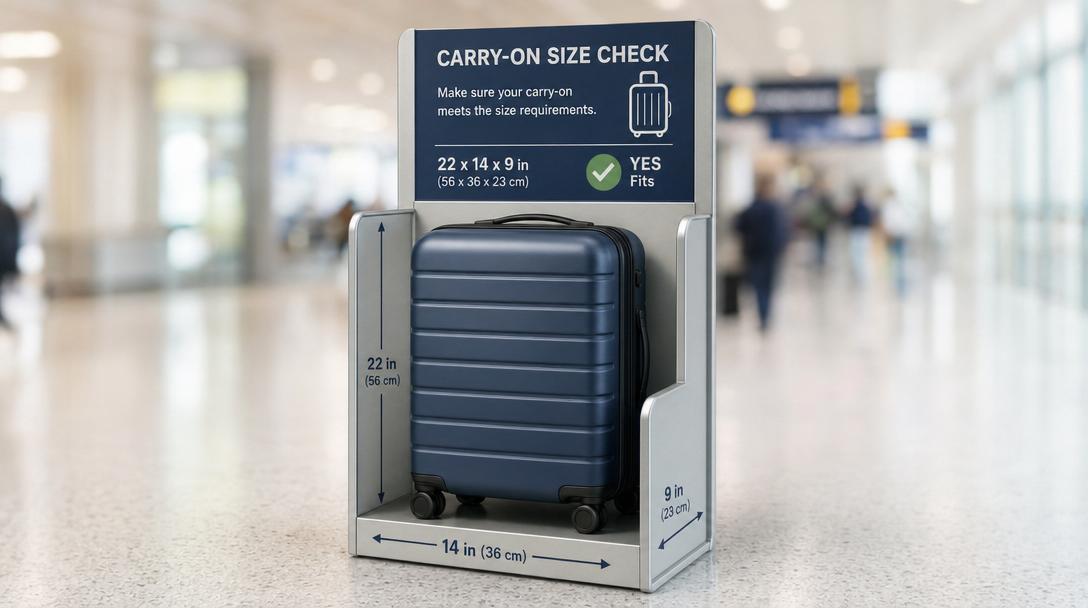
Most U.S. carriers like American Airlines, Delta, and United enforce a 22 x 14 x 9-inch (56 x 36 x 23 cm) maximum for carry-on bags. This includes wheels and handles. Southwest allows two free carry-ons but maintains the same size rules. Always check your specific airline’s policy—JetBlue’s 24-inch maximum for personal items creates exceptions. Failure to comply often results in $25–$100 gate-check fees or forced downsizing.
Pro Tip: Use a luggage size checker at home. American Airlines offers a free printable template on their baggage policies international page.
How Personal Item Dimensions Differ From Carry-on Bags
Personal items (e.g., purses, laptop bags) must fit under the seat ahead of you, typically maxing out at 18 x 14 x 8 inches. Airlines like Alaska and Spirit strictly enforce this, while Frontier counts diaper bags (1 per child) as separate from both carry-ons and personal items. Overpacking a "personal item" with travel-sized toiletries or extra clothing often leads to rejection at the gate.
Liquid Restrictions That Fit Within Carry-on Size Rules
The TSA’s 3-1-1 rule (3.4 oz containers or smaller in a 1-quart clear bag) applies to carry-ons. However, medications and baby formula bypass these limits. Liquid volumes count toward your carry-on’s space—pack travel-sized shampoo in a quart bag to avoid spills. Checked baggage allows larger containers, per checked baggage restrictions.
Did You Know: Airlines like Emirates permit 2 quart-sized liquid bags in carry-ons for international flights.
Common Mistakes That Cause Oversized Bag Rejections
Assuming all airlines share the same limits is risky. Norwegian Air’s 21-inch carry-on rule and Aer Lingus’ 20-inch limit catch unaware travelers. Using a soft-sided duffel that expands beyond stated dimensions is another frequent error. Always verify size allowances and compress packing cubes to meet requirements.
Packing Strategies to Maximize Carry-on Space
Roll clothes to fit 30% more in tight dimensions. Use compression sacks for bulky items like jackets. Airlines like Southwest permit 24-inch duffels as personal items if they fit under seats. Overpacking electronics or souvenirs in carry-ons risks exceeding weight limits (typically 40–50 lbs), which may trigger fees despite size compliance.
International Airlines’ Strictest Size Enforcement
Airlines like Ryanair and easyJet measure carry-ons with physical frames at boarding gates. British Airways enforces stricter weight checks on transatlantic flights. Asian carriers like ANA permit only one carry-on (22 x 16 x 10 inches) and no separate personal items. Researching local policies prevents last-minute repacking headaches.
Pro Tip: Airlines outside the U.S. often allow larger carry-on widths but limit heights—measure accordingly.
How to Check Your Airline’s Current Policy in 2026
Visit your carrier’s official baggage page—American Airlines updates their carry-on guidelines quarterly. Mobile apps like Delta Fly and United Airlines offer interactive size calculators. Ignoring updates risks surprises, especially as budget carriers like Allegiant tighten limits to boost ancillary revenue.
Ignoring airline-specific carry-on size rules risks fees, delays, and lost vacation time. Verify dimensions, weight, and prohibited items directly with your carrier before packing—then measure twice before departure.
Frequently Asked Questions
What are the standard carry-on size limits for most major U.S. airlines?
Most major U.S. airlines, including American Airlines, Delta, and United, generally enforce a maximum carry-on size of 22 x 14 x 9 inches (56 x 36 x 23 cm). This measurement includes any wheels and handles on the bag. Southwest Airlines also adheres to these same size rules.
How do personal item dimensions differ from carry-on bags?
Personal items, such as purses or laptop bags, are typically smaller than carry-on bags and must fit under the seat in front of you. Their dimensions usually max out at around 18 x 14 x 8 inches. Airlines like Alaska and Spirit strictly enforce these limits.
What are the liquid restrictions for carry-on bags?
The TSA's 3-1-1 rule applies to liquids in carry-ons, meaning containers must be 3.4 ounces (100 milliliters) or smaller and fit into one clear, quart-sized bag. Medications and baby formula are exceptions to these limits. These liquid volumes contribute to the overall space in your carry-on.
What are common mistakes that lead to oversized bag rejections?
Common mistakes include assuming all airlines have the same size limits, as some, like Norwegian Air and Aer Lingus, have stricter rules. Another frequent error is using soft-sided bags that expand beyond the stated dimensions. Always verify specific airline allowances and compress packing cubes to meet requirements.
How can travelers maximize space in their carry-on bags?
Travelers can maximize space by rolling clothes, which can fit 30% more items into tight dimensions. Using compression sacks for bulky items like jackets is also effective. Be mindful of weight limits, typically 40–50 lbs, to avoid additional fees.
Which international airlines are known for stricter carry-on size enforcement?
Airlines such as Ryanair and easyJet are known for physically measuring carry-ons at boarding gates. British Airways enforces stricter weight checks on transatlantic flights, and Asian carriers like ANA often permit only one carry-on without a separate personal item. Researching specific international policies is crucial.
How can I check my airline's current carry-on policy?
You should visit your airline's official baggage page, as policies can be updated regularly. Many airlines, like Delta and United, also offer interactive size calculators through their mobile apps. Checking these resources helps avoid surprises, especially with budget carriers that may tighten limits.